Hide In Drawings Best Hiding Spots Guide
Where to stand inside a drawing so seekers clear you last — or never.
What makes a hiding spot “best”
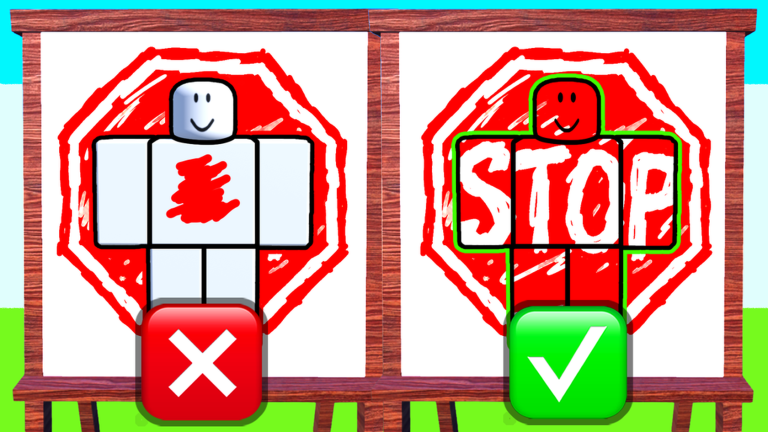
In Hide In Drawings, both players share one picture. A strong spot is not the coolest landmark — it is the place where your silhouette continues existing lines, values, and textures already in the art. The first player to spot the other wins, so your hide must survive a patient four-pass clear from How to Spot.
This guide ranks spot types that repeat across drawings. Exact canvases rotate, so learn patterns instead of memorizing one lobby screenshot.
S-tier spot types
Busy pattern clusters
Cross-hatching, scribble fills, leaf clusters, and brick-like grids swallow mid-value avatars. Stand where stroke density is already high so your outline adds noise instead of a new shape.
Value-matched midtones
Seekers lock onto the brightest whites and darkest blacks first. Mid-gray pockets that match your cosmetic palette are quieter. Pair this with the spending advice in Cosmetics & Money.
Edge breaks that already exist
Corners where two textures meet (sky vs tree, wall vs floor) create natural seams. Nestle into the seam so your contour looks like part of the join.
A-tier spot types
Secondary subjects
Not the main character of the drawing — the side prop, background animal, or small furniture piece. Seekers clear the focal subject early; secondary props get a later pass.
Repeating motifs
If the art has five similar windows, stand in window three. Repetition fatigues scanners.
Soft shadow pools
Drawn shadows under furniture or trees hide matte cosmetics well. Avoid neon items here — particles light up the pool.
B-tier (situational)
High ledges inside the art
Only strong if the drawing implies height and seekers start their camera low. Weak if everyone learned to tilt up first.
Almost-empty margins
Can work as reverse psychology once, then fails forever in the same friend group.
F-tier spots to avoid
| Spot | Why it fails |
|---|---|
| Dead center of the focal subject | First place every seeker looks |
| Flat open sky / blank wall | Your silhouette is a sticker |
| Bright unique props | One-of-one objects get name-checked |
| Constant micro-movement zones | Motion is a free reveal |
| Loud cosmetic + busy art | Particles fight the camouflage |
Placement checklist (15 seconds)
- Identify the focal subject — do not stand on it.
- Find the densest midtone cluster within walk range.
- Match your cosmetic value to that cluster (or stay default).
- Stop moving completely before the hunt intensifies.
- Keep a mental exit only if the round rules allow reposition — most wins come from stillness.
Bait and second-layer thinking
Advanced players plant an obvious “almost hide” elsewhere in their mind: a slightly wrong prop that seekers will check, burning time. You do not need a physical decoy item — you need to predict their first two clears. Read more canvas logic in Reading Drawings.
If you lose twice to the same spot type, open the Tier List and mark that type down until you solve the counter-scan.
Practice plan
- Session A: only S-tier busy clusters — ignore seeking score.
- Session B: only secondary subjects.
- Session C: mix, then review deaths with the seeker guide’s four-pass route.
Watch the mid-article gameplay once to see how creators pick pockets inside live drawings, then jump back into a lobby while the checklist is fresh.
Related pages
- How to Hide — full camouflage theory
- How to Spot — how rivals will clear you
- Controls — stay still on every device
- Getting Started — round basics
- Updates — when new drawing packs change meta spots
Best spots are portable skills. Learn the tiers above and every new canvas EX10 Hide ships becomes readable on the first queue.
Frequently Asked Questions
Quick answers to the most common questions.
What is the best hiding spot in Hide In Drawings?
Busy midtone pattern clusters and existing texture seams outperform standing on the main subject of the drawing.
Should I hide on the biggest object in the picture?
Usually no. The focal subject is the first place seekers clear.
Do cosmetics change the best spots?
Yes. Loud or neon items force you into denser cover or fail on flat art. See Cosmetics & Money.
How do I practice hiding spots?
Play sessions that focus only on placement, then review losses with the four-pass seeker route from How to Spot.